
Blog / Honda

The History of Honda: From Bikes to EVs

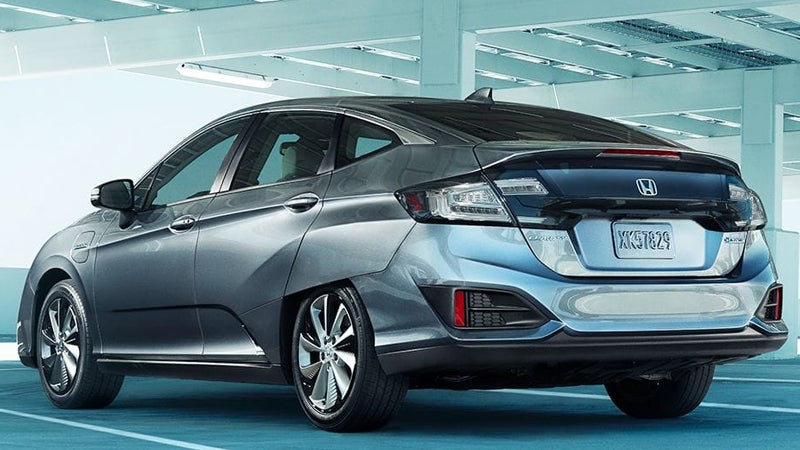
2018 Honda Clarity - The History of Honda: From Bikes to EVs

Honda's History: From Motorized Bicycles to Engineering the Impossible 

Honda's story begins with a bicycle, a small engine, and a man who apparently thought the automotive industry needed shaking up. Nearly eight decades later, Honda builds economical family cars, sophisticated hybrids, and serious performance machines. It's an extraordinary journey for a company that started by attaching engines to bicycles in postwar Japan. For drivers around Cockeysville, MD, there's considerable engineering history behind that familiar badge. 

1946–1949: A Bicycle with Ambitions 

In 1946, Soichiro Honda established the Honda Technical Research Institute in Hamamatsu, Japan. His early experiments involved fitting small engines to bicycles, providing affordable transportation during Japan's recovery. Honda Motor Co., Ltd. officially arrived on September 24, 1948, with Takeo Fujisawa subsequently helping develop its commercial operations. By 1949, Honda had introduced the Dream D-Type, its first complete motorcycle. The company had graduated from modifying bicycles to manufacturing machines of its own. 

1963: Four Wheels and an Unexpected Beginning 

You might expect Honda's first automobile to have been a family sedan. It wasn't. The 1963 T360 was a tiny pickup powered by a 356cc, 4-cylinder engine producing approximately 30 hp. Later that year came the S500 sports car, featuring a high-revving engine influenced by Honda's motorcycle experience. These vehicles established something important: Honda wasn't particularly interested in following the conventional automotive script. 

1959–1982: America Meets Honda 

American Honda Motor Co. opened in 1959, initially selling motorcycles. The N600 reached American customers in 1969, offering compact transportation when American automobiles were frequently enormous. The Civic debuted in Japan in 1972 and arrived in America as a 1973 model. Rising fuel costs made its efficiency increasingly attractive. The Accord followed in 1976, eventually becoming a familiar sight on American roads. In November 1982, Honda began automobile production in Marysville, Ohio, becoming the first Japanese automaker to manufacture cars in the United States. 

VTEC: Because Ordinary Engines Were Apparently Boring 

Honda developed a fascination with extracting impressive performance from small engines. VTEC variable valve timing and lift technology debuted in the production Honda Integra in Japan in 1989. By changing valve operation according to engine speed, the system combined manageable low-speed behavior with stronger high-rpm performance. The Civic Si and Civic Type R continued that, proving that modest engine displacement didn't have to mean modest entertainment. 

Safety Became Part of the Equation 

Honda's Advanced Compatibility Engineeringâ„¢ (ACEâ„¢) body structure helps manage crash forces and improve occupant protection. Honda Sensing® later introduced driver-assistance technologies, including Collision Mitigation Braking Systemâ„¢, Adaptive Cruise Control, Lane Keeping Assist System, and Road Departure Mitigation System. Availability varies by model and year. These systems support driver awareness, although they cannot replace attention or judgment. Even Honda's engineers haven't discovered a cure for distracted driving. 

Hybrids Arrived Before They Became Fashionable 

Honda introduced the Insight hybrid to American customers in 1999, demonstrating how gasoline-electric propulsion could improve efficiency. The company had already explored electric transportation with the limited-production EV Plus during the 1990s. Today, hybrid versions of the Civic, Accord, and CR-V continue that development, while the revived Prelude brings electrification to a sports coupe. The all-electric Prologue expands Honda's SUV offerings. Honda has also announced ambitions for battery-electric and fuel-cell vehicles to represent all global new-vehicle sales by 2040, although future targets may change. 

Experience Honda's Legacy Near Cockeysville 

From motorized bicycles to VTEC engines, racing success, and modern electrification, Honda has built its reputation through engineering experimentation. Not every idea became a commercial triumph, but the willingness to experiment produced some remarkable vehicles. Visit Anderson Honda near Cockeysville, MD, to explore new available inventory and discover how that history influences today's lineup. Schedule a test drive online today. Nearly eight decades after Soichiro Honda began experimenting with bicycle engines, the results are still worth experiencing. 

Posted in:

Related Posts

Check Engine Light On? Here's What to Do

Check Engine Light On? Here's What to Do

What to Do When Your Check Engine Light Is On Seeing a warning glow on your dashboard during your daily commute can instantly cause stress. Fortunately, the service team at Anderson Honda in Cockeysville, MD, is ready to help you decode your vehicle and get you back on the road safely. Reach out to our service department today for more information or to schedule an inspection. What Does the Check Engine Light Look Like? The check engine light is an amber or yellow icon shaped like a small engine outline, sometimes featuring the words "Check Engine" or "Service Engine Soon." This indicator appears on your dashboard instrument cluster as part of your Honda onboard diagnostic system. The light activates in two ways: steady or flashing. A steady glow typically signals a minor issue that still requires attention, while a flashing light indicates a severe problem, such as an engine misfire, that demands immediate action. Do I Need to Go to the Mechanic Right Away? Your next steps depend on how your vehicle behaves. Stop driving as soon as it is safe if the light appears alongside rough idling, reduced power, unusual smells, or a spiking temperature gauge. If the light remains steady and your car runs normally, you have a bit of time. Common triggers include a loose gas cap, a faulty oxygen sensor, or a worn spark plug. These issues are not emergencies, though ignoring them reduces fuel efficiency and performance. Drivers in Cockeysville, MD, can bring their vehicles to Anderson Honda, where a certified technician will connect a diagnostic scanner to retrieve the exact fault code. Do I Need to Tow My Car? A steady check engine light on a smoothly running vehicle generally allows for short drives to the service center. Certain conditions, however, require a tow truck. Arrange a tow if the light flashes, the car loses power, you notice smoke or burning smells, or the oil pressure and temperature lights activate. Driving under these conditions causes severe engine damage and leads to costly repairs. Visit Anderson Honda for a Diagnosis When your dashboard warning light activates, the team at Anderson Honda is ready to assist. Our trained technicians use advanced diagnostic tools to pinpoint the problem fast. From a quick adjustment to a complex repair, we explain the findings clearly and outline your best options without any pressure. Don't Wait on That Check Engine Light A dashboard warning serves as an early alert before a minor hiccup turns into a major breakdown. Knowing how to respond and when to call a tow truck saves you time and stress. Bring your vehicle to Anderson Honda in Cockeysville, MD, and let our service experts handle the rest.

2025 Honda Accord - 2026 Honda Accord vs. Toyota Camry: Two Great Sedans

Toyota Camry vs Honda Accord: Which Wins? 

2026 Honda Accord vs. Toyota Camry: Two Great Sedans The Honda Accord and Toyota Camry have been sparring for so long that comparing them feels almost compulsory. For 2026, though, there's a specific distinction between them. The Camry is now exclusively hybrid, while the Accord gives buyers a choice between a conventional gas powertrain and an available two-motor hybrid system. Both provide sensible fuel economy, useful technology, and enough passenger space to make the SUV default worth questioning in Cockeysville. Look more closely at the numbers, however, and the Accord makes a particularly strong case for drivers who value interior room and choice. The Accord Still Appeals to People Who Like Driving Independent reviewers continue to rate both cars highly, but the Accord has maintained a reputation for being one of the more satisfying midsize sedans from behind the wheel. The 2026 Honda Accord earned a place on Car and Driver's 10Best list, recognition of its broader combination of driving behavior, interior execution, and everyday usefulness. That doesn't make the Camry a poor alternative; these are 2 accomplished sedans aimed at many of the same buyers. The difference is that the Accord manages to handle the sensible family-car responsibilities without completely removing the driver from the conversation. The Tape Measure Favors the Honda Passenger space is one of the Accord's clearer advantages. It provides 105.7 cu. ft. of passenger volume compared with 99.9 cu. ft. in the Camry. Rear passengers receive 40.8 inches of legroom in the Honda versus 38 inches in the Toyota, a 2.8-inch difference that's more useful than it sounds once adults start occupying the back seats. There's an advantage behind them as well. Accord trunk capacity is 16.7 cu. ft., compared with 15.1 cu. ft. for the Camry. Neither is short on practicality, but buyers comparing midsize sedans in Cockeysville because they regularly carry passengers and luggage should spend some time inside both before deciding. Both Have Screens; The Accord Gives You Choices The 2026 Accord LX uses a 9-inch color touchscreen, while hybrid models step up to a 12.3-inch color touchscreen. Honda Sensing®, the brand's suite of safety and driver-assistive technologies, is standard throughout the Accord lineup. Wireless Apple CarPlay® compatibility is also standard, with wireless smartphone-integration availability varying across the lineup. The 2026 Camry counters with Toyota Safety Sense™, an 8-inch touchscreen as standard, an available 12.3-inch touchscreen, and standard Apple CarPlay® and Android Auto™ compatibility. This isn't a contest decided by who installs the largest rectangle in the dashboard. The more useful exercise is comparing Accord trims to see which equipment you'll use regularly. Hybrid Efficiency Comes with Two Different Strategies This is where the comparison changes character. Every 2026 Camry is a hybrid, using a 2.5L Inline 4-cylinder as part of its electrified powertrain. Output reaches up to 232 net combined hp, while fuel economy can reach 51 combined MPG depending on configuration. The Accord sticks with options. Its available two-motor hybrid system produces 204 hp and can return up to 51 MPG city, 44 MPG highway, and 48 MPG combined depending on trim. Buyers interested in maximizing efficiency can explore Accord Hybrid inventory, while those who don't need a hybrid still have conventional gasoline Accord configurations to consider. The Better Sedan Depends on What You Want from One There's no need to manufacture a crushing defeat here. The Camry brings excellent efficiency and makes hybrid power standard, while the Accord counters with greater passenger and trunk volume plus a broader choice of powertrains. Its 40.8 inches of rear legroom is useful for anyone regularly carrying adults in the back, and the available hybrid system provides strong efficiency without making electrification mandatory across the entire lineup. That's the Accord's appeal: it gives midsize-sedan buyers several ways to configure essentially the same practical idea. Put the Accord Comparison into the Real World Anderson Honda shoppers can explore the 2026 Honda Accord inventory, compare available Accord trims and hybrid models, review financing options, and value a trade before choosing a configuration. If the Accord's extra passenger space and available hybrid power look convincing on paper, the sensible next move is seeing how the car feels away from the specification sheet. Visit us or schedule a test drive online today.

Winter Maintenance Guide: Essential Steps to Prepare Your Honda for Cold Weather

Winter Maintenance Guide: Essential Steps to Prepare Your Honda for Cold Weather

Cold weather can create new challenges for your vehicle, from lower temperatures affecting engine fluids to changing road conditions requiring additional preparation. Completing seasonal maintenance before winter arrives can help keep your Honda performing properly through colder months. At Anderson Honda in Cockeysville, MD, we help drivers understand the importance of winter vehicle maintenance, including checking antifreeze levels, inspecting tires, servicing batteries, and preparing essential vehicle systems for cold-weather driving. A reliable winter maintenance routine can help support your Honda’s performance, comfort, and dependability when temperatures drop. Whether you drive a Honda Civic for daily commuting, a Honda CR-V for family transportation, or a Honda Pilot for additional space, seasonal preparation is an important part of responsible vehicle ownership. Why Winter Vehicle Maintenance Matters Cold temperatures can impact several areas of your vehicle. Engine fluids may become less effective in extreme conditions, batteries can lose power more quickly, and tires may experience reduced traction on wet, icy, or snow-covered roads. Winter maintenance helps drivers prepare for: Colder temperatures Reduced road traction Increased vehicle system demands Longer warm-up periods Changing driving conditions Preparing your Honda before winter arrives can help identify potential concerns early and ensure important components are ready for seasonal driving. Check and Maintain Your Honda’s Antifreeze and Coolant One of the most important winter maintenance tasks is checking your vehicle’s antifreeze, also known as engine coolant. Antifreeze helps regulate engine temperature and prevents the coolant system from freezing during cold weather. A properly maintained coolant system helps: Protect the engine from freezing temperatures Support proper engine temperature regulation Prevent overheating Maintain efficient operation Drivers should check coolant levels regularly and follow Honda’s recommended maintenance schedule for coolant inspections and replacement. It is also important to use the correct coolant type recommended for your specific Honda model. Using the wrong coolant or mixing incompatible coolant types may affect cooling system performance. Winter Battery Maintenance Cold weather can place additional strain on your vehicle’s battery. Lower temperatures can reduce battery performance, making it harder for the engine to start. Before winter driving begins, consider having your battery inspected for: Battery charge level Corrosion around terminals Signs of wear Proper electrical performance A battery inspection is especially important if your vehicle is older or if you notice slower engine starts. Check Your Tires for Winter Driving Conditions Your tires play an important role in maintaining traction and control during winter weather. Cold temperatures can affect tire pressure, and worn tires may provide reduced grip on slippery roads. Winter tire maintenance should include: Checking tire pressure Inspecting tread depth Looking for uneven wear Rotating tires as recommended Confirming proper alignment Properly maintained tires help support handling, braking, and overall driving confidence during changing weather conditions. Winter Windshield Wiper and Wiper Fluid Maintenance Winter weather often brings rain, snow, ice, and road spray that can reduce visibility. Maintaining your windshield cleaning system helps keep your view clear. Before winter arrives, inspect: Windshield wiper condition Washer fluid levels Washer fluid freeze protection rating Windshield washer spray performance Replacing worn wiper blades can help improve visibility during storms and wet driving conditions. Inspect Your Brakes Before Winter Brake performance is important throughout the year, but winter conditions can make stopping distances more challenging. Drivers should have their brake system inspected if they notice changes in performance. Common brake warning signs include: Squealing or grinding noises Brake pedal changes Longer stopping distances Vehicle pulling while braking Routine brake inspections help ensure your Honda is prepared for changing road conditions. Check Your Vehicle Fluids Several vehicle fluids play an important role in winter operation. Before temperatures drop, inspect fluid levels and follow recommended maintenance intervals. Important fluids to check include: Engine oil Antifreeze and coolant Brake fluid Transmission fluid Windshield washer fluid Using the correct fluids helps support proper vehicle operation and long-term performance. Heating and Defrost Systems Winter Maintenance A properly functioning heating and defrost system helps maintain comfort and visibility during winter driving. Before colder weather arrives, check: Cabin heater performance Front and rear defrosters Climate control operation Airflow from vents A functioning defrost system helps clear frost, fog, and condensation from windows. Prepare Your Honda Emergency Kit Winter driving conditions can change quickly. Keeping an emergency kit in your vehicle can help you stay prepared during unexpected situations. A winter vehicle emergency kit may include: Flashlight Blankets Gloves Ice scraper Jumper cables First-aid supplies Bottled water Basic tools Drivers who frequently travel longer distances may want to include additional supplies based on their driving habits and local conditions. Schedule Honda Winter Maintenance at Anderson Honda Regular maintenance is an important part of preparing your vehicle for every season. Winter service helps ensure essential systems, fluids, and components are ready for colder temperatures. At Anderson Honda in Cockeysville, MD, our service team can help inspect your Honda and address seasonal maintenance needs. From coolant checks and battery inspections to tire service and fluid maintenance, we provide the support needed to help keep your vehicle ready for winter driving. Frequently Asked Questions About Winter Car Maintenance How often should I check my antifreeze before winter? Antifreeze levels should be checked regularly as part of routine vehicle maintenance. Drivers should follow their Honda’s recommended maintenance schedule for coolant inspections and replacement. What does antifreeze do in a vehicle? Antifreeze helps regulate engine temperature and protects the cooling system from freezing in cold conditions. It also helps support proper engine operation throughout changing temperatures. Can cold weather affect my car battery? Yes. Cold temperatures can reduce battery performance and make starting the engine more difficult. Having your battery inspected before winter can help identify potential issues. Should I change my oil before winter? Following your Honda’s recommended oil change schedule is important throughout the year. Fresh engine oil helps support proper lubrication and engine performance in different driving conditions. Do I need winter tires in Maryland? Winter tires may benefit some drivers depending on driving habits, road conditions, and local weather patterns. Drivers should evaluate their tire needs based on how and where they typically travel. How do I prepare my Honda for snow and ice? Preparing your Honda for winter includes checking antifreeze, inspecting tires, testing the battery, maintaining windshield visibility, checking fluids, and ensuring heating and defrost systems work properly. How can I improve visibility while driving in winter? Drivers can improve winter visibility by replacing worn wiper blades, maintaining proper washer fluid levels, keeping windows clear, and ensuring defrost systems function correctly. What should I keep in my car during winter? A winter emergency kit may include items such as an ice scraper, flashlight, jumper cables, blankets, gloves, and basic supplies to help during unexpected situations.