

Modern vehicle design is full of sophisticated engineering, from advanced safety systems to turbocharged powertrains. Yet one of the most important components in your Honda remains a simple liquid flowing through a network of passages, hoses, and radiators. Coolant rarely receives much attention until a warning light appears or an engine begins running hot. By then, the conversation has usually become far more expensive. For Honda owners in Cockeysville, MD, understanding the cooling system and maintaining it properly can help prevent overheating, reduce component wear, and support long-term engine reliability.
Why Coolant Matters More Than Most Drivers Realize
An engine generates tremendous amounts of heat every time it operates. Without an effective cooling system, temperatures would rise quickly beyond safe operating limits. Coolant circulates through the engine, absorbing heat before carrying it to the radiator, where that heat is released into the air. The process sounds simple, but it is fundamental to the health of the entire powertrain.
Beyond temperature control, coolant also protects metal components from corrosion and helps preserve seals, hoses, and gaskets throughout the cooling system. It is one of the few maintenance items that affects both performance and longevity at the same time.
Close Relation to Antifreeze
Many drivers use the terms interchangeably, though there is a slight difference.
Antifreeze is the concentrated chemical formula, typically made with ethylene glycol or propylene glycol. Coolant is the mixture created when antifreeze is blended with water, often in a 50/50 ratio, and installed in the vehicle.
That mixture allows the cooling system to perform effectively in both hot summers and cold winters while helping prevent freezing, boiling, and corrosion.
Not Every Coolant Belongs in Every Vehicle
One of the most common mistakes drivers make is assuming all coolant products are essentially the same.
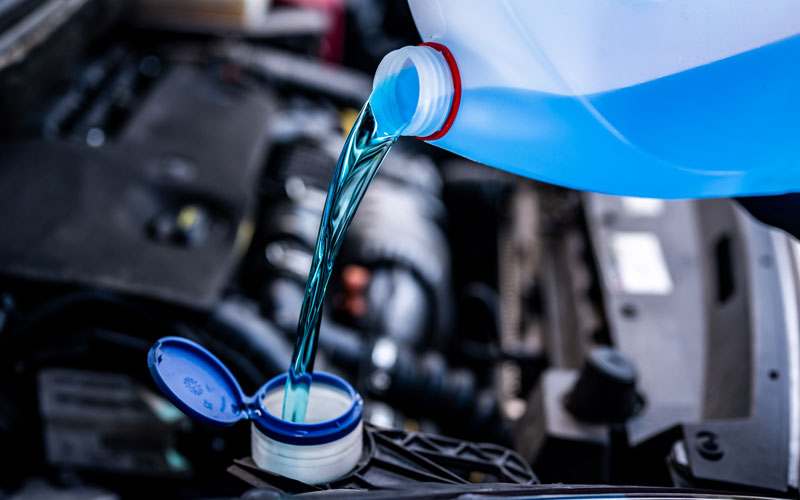
Different manufacturers engineer their cooling systems around specific coolant formulations. Honda recommends Honda Long Life Antifreeze/Coolant Type 2, a blue HOAT (Hybrid Organic Acid Technology) developed specifically for Honda vehicles.
Using the wrong type can reduce corrosion protection and create compatibility issues within the cooling system. When in doubt, always consult your owner’s manual or speak with a Honda service professional before adding fluids to the system.
When Should Coolant Be Flushed or Refilled?
Unlike engine oil, coolant does not require frequent replacement. Still, it does not last forever. Over time, the protective additives within the coolant begin breaking down. As that happens, the fluid becomes less effective at controlling corrosion and maintaining proper operating temperatures.
Many Honda vehicles require coolant replacement around every five years or 45,000 miles, though exact intervals vary by model and driving conditions. A cloudy appearance, discoloration, visible leaks, or higher-than-normal operating temperatures can all indicate that service may be needed sooner.
A simple refill may be appropriate when coolant levels are low and the fluid remains clean. A full flush becomes necessary when the fluids have aged beyond the recommended service life or shows signs of contamination.
What Happens During a Fluid Flush?
A coolant flush removes old fluid from the cooling system before replacing it with fresh coolant. During the service, technicians often inspect related components such as hoses, radiator connections, the radiator cap, and the water pump.
This inspection can help identify small concerns before they develop into larger repairs. More importantly, fresh coolant restores the system’s ability to manage heat effectively and maintain proper protection throughout the engine and cooling system.
Schedule Honda Cooling System Service in Cockeysville, MD
Coolant may not receive the same attention as oil changes or tire replacements, but its role is every bit as important. Maintaining the proper fluid levels and following recommended service intervals can help protect your Honda for years to come.
If you are unsure when your coolant was last serviced, the team at Anderson Honda can inspect your cooling system, perform a flush if needed, and help keep your vehicle operating at its best throughout every season in Maryland.
Connect with us

