
If you've been shopping for a used Honda around Cockeysville, Maryland and wondering whether certified pre-owned is worth it, you're not alone. Certified pre-owned vehicles come up often in buyer research, and there are plenty of common questions around what the program includes. This guide breaks it all down so you can shop with confidence. What Is Honda Certified Pre-Owned? Honda Certified Pre-Owned, also known as HondaTrue Certified, is a program that allows pre-owned Honda vehicles to be sold under a set of strict manufacturer-backed standards. Not every used Honda qualifies - vehicles must meet age and mileage requirements and pass a rigorous inspection process before earning the certified pre-owned designation. It's Honda's way of standing behind the quality of a used vehicle. What Are the Benefits of Buying Certified Pre-Owned? One of the biggest advantages of a certified pre-owned Honda is the peace of mind it offers. You're not just buying a used car - you're buying one that has been reviewed, reconditioned, and backed by Honda. Benefits typically include a multi-point inspection, extended warranty coverage, roadside assistance, and a vehicle history report. How Does the Honda Inspection Process Work? Every CPO Honda must pass a 182-point inspection before it can be sold under the program. Trained technicians examine the vehicle from top to bottom, checking everything from the engine and transmission to the brakes, tires, and interior components. Any item that doesn't meet Honda's standards must be repaired or replaced. This comes up often because buyers want to know what's actually been looked at - and the answer is: nearly everything. What Are the HondaTrue Certified Tiers? Honda's CPO program offers two tiers: HondaTrue Certified and HondaTrue Certified+. HondaTrue Certified applies to Honda vehicles that are up to six model years old with under 80,000 miles. HondaTrue Certified+ covers newer vehicles - typically up to two model years old with fewer than 24,000 miles - and includes additional coverage benefits. What's the Difference Between Certified Pre-Owned and a Regular Used Car? A standard used car may come with no inspection, no warranty, and no manufacturer involvement. A certified pre-owned Honda, by contrast, goes through Honda's multi-point inspection, meets specific eligibility requirements, and comes with warranty coverage. What Warranty Coverage Comes With a Certified Pre-Owned Honda? Warranty coverage is one of the key reasons shoppers choose certified pre-owned over standard used vehicles. HondaTrue Certified vehicles typically come with a limited powertrain warranty and a 7-year/100,000-mile powertrain coverage from the original sale date, depending on the tier. Roadside assistance is also included. These protections can save you significantly on unexpected repair costs down the road. Visit Anderson Honda to Explore Certified Pre-Owned Options If you have more questions about the program or you're ready to browse available inventory, the team at Anderson Honda is here to help. Certified pre-owned Hondas offer a smart path to reliable, inspected, and warranty-backed vehicles at a more accessible price point. Stop by or schedule a test drive to explore what's currently available and find the right fit for your needs.
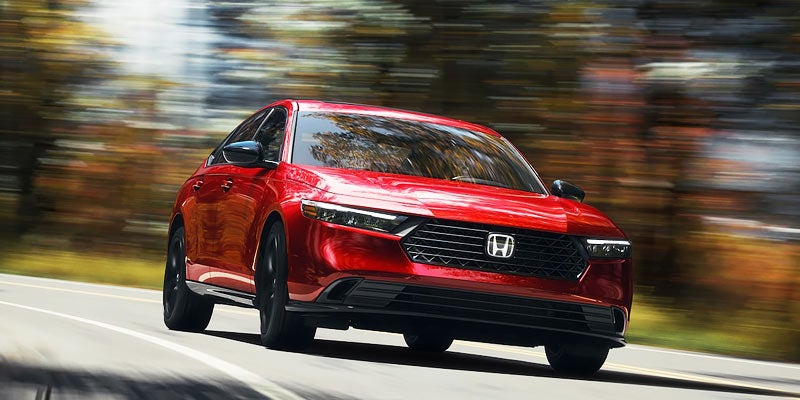
Toyota Camry vs Honda Accord: Which Wins?
2026 Honda Accord vs. Toyota Camry: Two Great Sedans The Honda Accord and Toyota Camry have been sparring for so long that comparing them feels almost compulsory. For 2026, though, there's a specific distinction between them. The Camry is now exclusively hybrid, while the Accord gives buyers a choice between a conventional gas powertrain and an available two-motor hybrid system. Both provide sensible fuel economy, useful technology, and enough passenger space to make the SUV default worth questioning in Cockeysville. Look more closely at the numbers, however, and the Accord makes a particularly strong case for drivers who value interior room and choice. The Accord Still Appeals to People Who Like Driving Independent reviewers continue to rate both cars highly, but the Accord has maintained a reputation for being one of the more satisfying midsize sedans from behind the wheel. The 2026 Honda Accord earned a place on Car and Driver's 10Best list, recognition of its broader combination of driving behavior, interior execution, and everyday usefulness. That doesn't make the Camry a poor alternative; these are 2 accomplished sedans aimed at many of the same buyers. The difference is that the Accord manages to handle the sensible family-car responsibilities without completely removing the driver from the conversation. The Tape Measure Favors the Honda Passenger space is one of the Accord's clearer advantages. It provides 105.7 cu. ft. of passenger volume compared with 99.9 cu. ft. in the Camry. Rear passengers receive 40.8 inches of legroom in the Honda versus 38 inches in the Toyota, a 2.8-inch difference that's more useful than it sounds once adults start occupying the back seats. There's an advantage behind them as well. Accord trunk capacity is 16.7 cu. ft., compared with 15.1 cu. ft. for the Camry. Neither is short on practicality, but buyers comparing midsize sedans in Cockeysville because they regularly carry passengers and luggage should spend some time inside both before deciding. Both Have Screens; The Accord Gives You Choices The 2026 Accord LX uses a 9-inch color touchscreen, while hybrid models step up to a 12.3-inch color touchscreen. Honda Sensing®, the brand's suite of safety and driver-assistive technologies, is standard throughout the Accord lineup. Wireless Apple CarPlay® compatibility is also standard, with wireless smartphone-integration availability varying across the lineup. The 2026 Camry counters with Toyota Safety Sense™, an 8-inch touchscreen as standard, an available 12.3-inch touchscreen, and standard Apple CarPlay® and Android Auto™ compatibility. This isn't a contest decided by who installs the largest rectangle in the dashboard. The more useful exercise is comparing Accord trims to see which equipment you'll use regularly. Hybrid Efficiency Comes with Two Different Strategies This is where the comparison changes character. Every 2026 Camry is a hybrid, using a 2.5L Inline 4-cylinder as part of its electrified powertrain. Output reaches up to 232 net combined hp, while fuel economy can reach 51 combined MPG depending on configuration. The Accord sticks with options. Its available two-motor hybrid system produces 204 hp and can return up to 51 MPG city, 44 MPG highway, and 48 MPG combined depending on trim. Buyers interested in maximizing efficiency can explore Accord Hybrid inventory, while those who don't need a hybrid still have conventional gasoline Accord configurations to consider. The Better Sedan Depends on What You Want from One There's no need to manufacture a crushing defeat here. The Camry brings excellent efficiency and makes hybrid power standard, while the Accord counters with greater passenger and trunk volume plus a broader choice of powertrains. Its 40.8 inches of rear legroom is useful for anyone regularly carrying adults in the back, and the available hybrid system provides strong efficiency without making electrification mandatory across the entire lineup. That's the Accord's appeal: it gives midsize-sedan buyers several ways to configure essentially the same practical idea. Put the Accord Comparison into the Real World Anderson Honda shoppers can explore the 2026 Honda Accord inventory, compare available Accord trims and hybrid models, review financing options, and value a trade before choosing a configuration. If the Accord's extra passenger space and available hybrid power look convincing on paper, the sensible next move is seeing how the car feels away from the specification sheet. Visit us or schedule a test drive online today.